
I.B.3 Gluteal Region & Thigh: Anterior Thigh: Page 2 of 3
×
![Image]()
 |
| 🔍 Tap on image to enlarge |
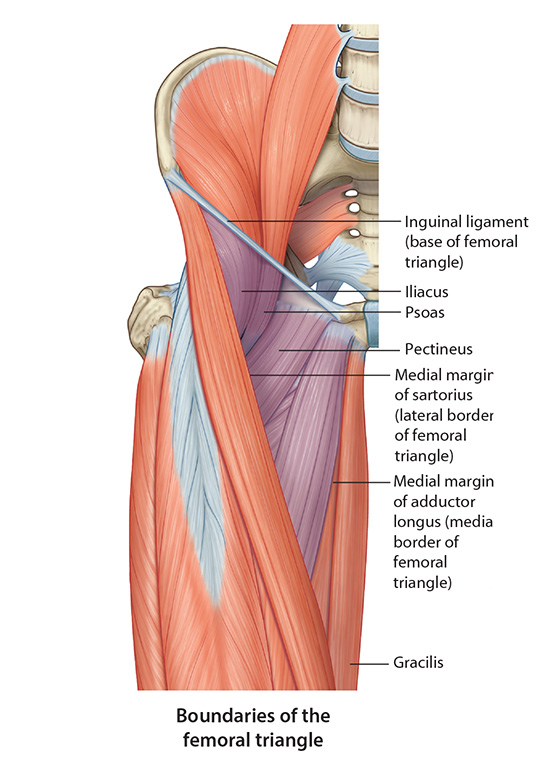
| Step 8: Add the inguinal ligament which is formed by the fascial plane that is an extension of the external oblique muscle of the abdominal wall. |
As the upper part of the thigh joins the pelvis, an area known as the femoral triangle becomes evident.

|
Step 9: Using the Draw tool, outline the femoral triangle. |
 |
What structures are located in theis triangle? |
|
Femoral nerve, artery,vein and lymphatic drainage. (NAVL- Lateral to medial description of the contents of the femoral triangle) |
|
|
Why is this triangle important clinically? |
|
|
| Step 10: Add the inguinal lymph nodes. | |
| Step 11: Add the pelvic lymph nodes. |
|
Why is the connection between the femoral and pelvic lymph nodes so important? |
|
Infections or tumors distal to the pelvis will often manifest as enlarged lymph nodes in the inguinal triangle. |
|